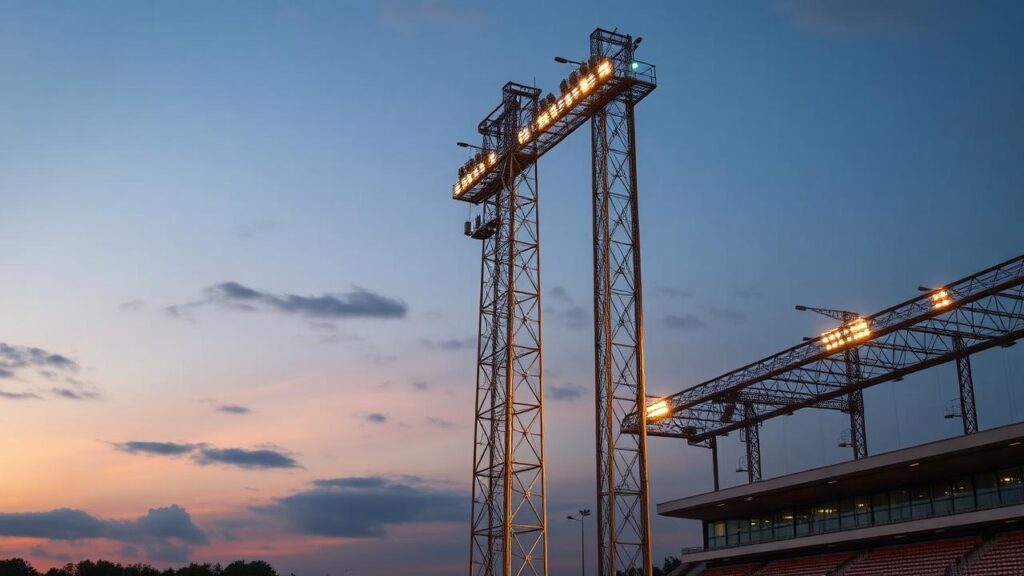
Airport lighting systems play a vital role in ensuring safe aircraft operations during takeoff, landing, taxiing, and apron activities, especially during night operations and low-visibility conditions. These systems are a critical part of airport infrastructure and must meet strict international and national aviation standards.
RPTI Pvt. Ltd. has emerged as a trusted partner for airport authorities and aviation infrastructure projects, delivering precision-engineered airfield lighting solutions compliant with ICAO Annex 14 and DGCA regulations, ensuring safety, reliability, and long-term performance.
The Critical Role of Airport Lighting in Aviation Safety
Airport lighting systems guide pilots visually when electronic navigation aids are limited or unavailable. Properly designed and maintained lighting:
- Enhances runway and taxiway visibility
- Prevents runway incursions
- Enables safe operations in fog, rain, and night conditions
- Supports CAT I, CAT II, and CAT III precision approaches
Every lighting component must operate flawlessly under harsh weather conditions, continuous usage, and strict operational tolerances.
Types of Airfield Lighting Systems
1. Runway Lighting Systems
Runway lighting provides visual guidance to aircraft during landing and takeoff operations.
Runway Edge Lights
- White lights along runway edges
- Last 600 meters displayed in yellow (caution zone)
- Available in High, Medium, and Low Intensity (HIL/MIL/LIL)
Runway Centerline Lights
- White lights for most of the runway
- Alternate red and white for the final 900 meters
- All red for the final 300 meters
- 15-meter spacing for CAT II and CAT III operations
Threshold Lights
- Green lights visible to approaching aircraft
- Red lights visible from the runway side
- Wing bar configuration for precision approaches
Runway End Lights
- Red lights marking the runway end
- Visible only from the runway direction
2. Approach Lighting Systems (ALS)
Approach lighting systems assist pilots during final descent and alignment.
PAPI (Precision Approach Path Indicator)
- Four-light wing bar system
- Visual glide slope indication
- Two white + two red = correct approach angle
VASI (Visual Approach Slope Indicator)
- Traditional approach lighting system
- Two-bar or three-bar configurations
ALS Configurations
- CAT I: SALS or MALSF
- CAT II: ALSF-1
- CAT III: ALSF-2 with sequenced flashers
3. Taxiway Lighting Systems
Taxiway lighting ensures safe aircraft movement on the ground.
Taxiway Edge Lights
- Blue omnidirectional lights
- 60-meter spacing on straight taxiways
- Reduced spacing on curves
Taxiway Centerline Lights
- Green lights for normal taxiways
- Alternating green/yellow at critical zones
- Essential for low-visibility operations
Stop Bars
- Red unidirectional lights across taxiways
- Controlled by Air Traffic Control (ATC)
- Critical for preventing runway incursions
4. Apron Lighting Systems
Apron lighting supports aircraft parking, maintenance, and ground handling.
- High-mast LED flood lighting
- 20–50 lux horizontal illuminance
- Glare-controlled design for pilot and ground crew safety
- Energy-efficient LED systems
Regulatory Compliance for Airport Lighting Systems
ICAO Annex 14 Requirements
The International Civil Aviation Organization (ICAO) specifies standards for:
- Light intensity levels
- Color specifications
- Beam spread and photometric characteristics
- Spacing and placement
- Maintenance and inspection intervals
DGCA CAR Standards (India)
The Director General of Civil Aviation (DGCA) mandates:
- Mandatory lighting systems for licensed aerodromes
- Inspection and certification procedures
- Compliance documentation
- Qualified personnel for installation and maintenance
Technical Specifications of Airfield Lighting
Light Intensity Categories
| Category | Visibility Conditions | Intensity Range |
|---|---|---|
| LIL (Low Intensity) | Good visibility | 50–100 cd |
| MIL (Medium Intensity) | Moderate visibility | 500–1,000 cd |
| HIL (High Intensity) | Poor visibility / Night | 10,000–20,000 cd |
Power Supply and Backup Systems
Primary Power Supply
- Constant Current Regulators (CCR)
- Series circuit configuration
- Multiple brightness control steps
Backup Power Systems
- Diesel generators with automatic start
- UPS for critical lighting circuits
- Switchover time under 15 seconds for CAT II/III operations
Airport Lighting Installation Best Practices
Phase 1: Design and Planning
- ICAO-compliant photometric design
- Cable routing optimization
- CCR sizing calculations
- Control and monitoring system architecture
Phase 2: Civil Works
- Trenching and conduit installation
- Light base mounting
- Drainage planning
- Foreign Object Debris (FOD) prevention
Phase 3: Electrical Installation
- Series circuit wiring
- CCR installation and testing
- Control panel and ALCMS integration
Phase 4: Commissioning
- Individual light testing
- Insulation resistance testing
- Intensity calibration
- NOTAM coordination
Maintenance of Airport Lighting Systems
Preventive Maintenance Schedule
Daily
- Visual inspection during operations
- Lamp outage reporting
- CCR status checks
Weekly
- Fixture cleaning
- Detailed visual inspection
- Vegetation clearance
Monthly
- Insulation resistance testing
- CCR performance verification
- Control system checks
Annually
- Complete photometric survey
- Intensity calibration
- Cable insulation testing
- Emergency power system testing
LED Technology in Airfield Lighting
Advantages of LED Airport Lighting
- Extended Lifespan: 50,000+ hours vs 1,000 hours (incandescent)
- Energy Savings: 40–60% reduced power consumption
- High Reliability: Solid-state construction
- Superior Visibility: Consistent color output
- Lower Maintenance Costs: Fewer replacements
Retrofit Considerations for Existing Airports
- CCR compatibility assessment
- Intensity matching to ICAO requirements
- Phased transition to minimize operational disruption
- Updated compliance documentation
Conclusion
Airport lighting systems demand precision engineering, strict regulatory compliance, and operational reliability. With extensive experience in aviation infrastructure, RPTI Pvt. Ltd. delivers end-to-end airfield lighting solutions that enhance safety, efficiency, and long-term performance.
Planning a new airport lighting project or upgrading existing systems?
Contact our aviation infrastructure specialists today for ICAO- and DGCA-compliant solutions tailored to your operational requirements.